New vs. Pre-Owned Private Jets: Which Offers Better Value?
Should you buy a new or pre-owned private jet? Compare price, depreciation, maintenance, warranties, engine programs and total cost of ownership over five years.
No. 004 · 26 Oct 2026 · 12 min read · Aircraft Acquisition
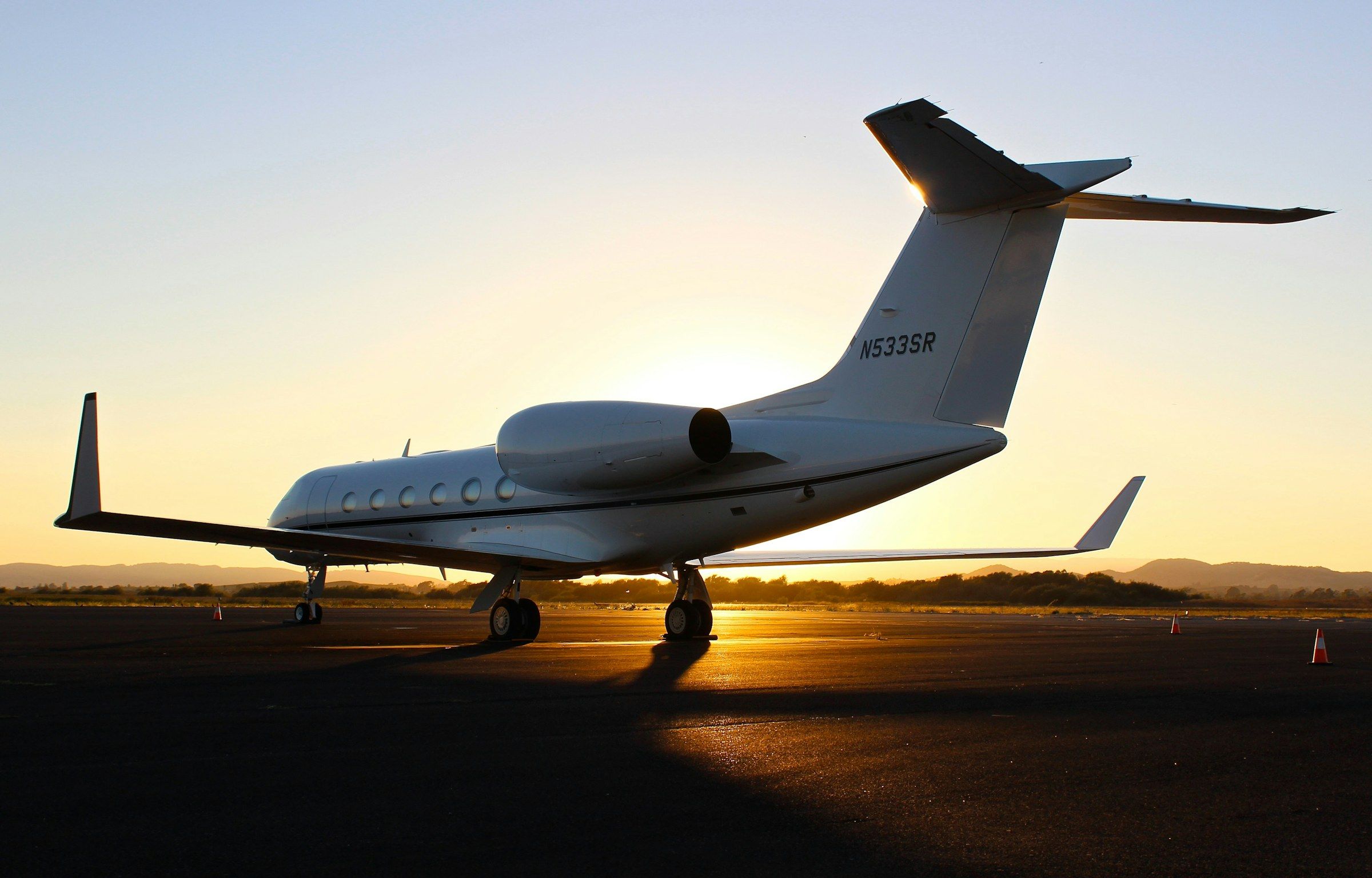
Photo: Chris Leipelt on Unsplash
Neither a new nor a pre-owned private jet is automatically the better buy. A new jet offers the latest technology, a warranty and a tailored interior at a higher price. A pre-owned jet can deliver the same mission for much less up front, but its value depends heavily on its maintenance position and records. The better value is whichever aircraft has the lowest total cost for your mission over your ownership period.
A factory-new business jet is one of the most appealing purchases in aviation: modern avionics, a cabin built to your specification, full manufacturer support. The pre-owned market offers something different: capable aircraft that can fly the same essential missions at a much lower initial investment. This guide compares new vs. pre-owned private jets on price, depreciation, maintenance, warranties, upgrades and resale, with a worked five-year example.
Key takeaways
- Value is not the lowest asking price. It is the lowest total economic cost for an aircraft that fits your mission.
- Pre-owned jets offer lower entry prices and faster availability, but maintenance status can transform their real cost.
- New jets bring warranty cover and the latest technology, but a larger capital commitment and exposure to early depreciation.
- Buying used does not remove depreciation risk. Test several resale scenarios before you buy.
What does "value" mean when buying a private jet?
Value is not the same as the cheapest price. A well-priced aircraft that cannot fly your key routes, needs extensive maintenance, or is hard to resell can turn out to be very expensive.
Compare aircraft on their expected total economic cost across your ownership period, including:
- Purchase price and transaction costs
- Upgrades and refurbishment
- Financing or cost of capital
- Fixed and variable operating costs
- Unscheduled maintenance exposure
- Expected resale value
Then factor in the less tangible benefits: delivery timing, reliability, commonality with any aircraft you already operate and the ability to tailor the interior. For a full breakdown, see the true cost of owning a private jet.
The case for buying a new private jet
Latest technology. New aircraft may offer newer avionics, better connectivity, updated cabin systems and improved efficiency. Compare the actual models on your shortlist, as these advantages are not equal across every category.
Manufacturer warranty and support. New deliveries typically come with defined warranty cover, which can reduce early ownership risk. Review the duration, exclusions, labor coverage and whether it transfers to a future buyer.
Interior customization. Depending on the production slot and specification deadlines, you may be able to choose materials, layout, connectivity and finishes.
A known starting point. A new aircraft starts life with a defined delivery and acceptance process. It still needs careful technical review, documentation checks and acceptance procedures.
The trade-offs: a larger capital commitment, a potential wait for delivery, and exposure to changes in market value after you take delivery.
The case for buying a pre-owned private jet
Lower purchase price. A pre-owned jet may deliver the performance and cabin you need at a fraction of the price of a comparable new model. The discount depends on age, condition, equipment, market cycle and availability.
Faster availability. An aircraft already in service may be available much sooner than a factory order, although inspection findings, title issues, financing, refurbishment and closing can all cause delays.
Opportunities to buy well. Aircraft with strong maintenance history, desirable equipment, recently completed major inspections and suitable engine program coverage can represent excellent value. But an unusually low price may simply reflect expensive deferred work.
More choice. The used market offers different cabin layouts, model generations and price points, so you can compare several specific aircraft rather than committing to one production slot.
Private jet depreciation and resale value
Private jets are generally depreciating assets, but not at a fixed or predictable rate. Resale values are shaped by market supply, new deliveries, product cycles, interest rates, hours and cycles, maintenance status and the wider economy.
A new jet may lose more in absolute dollar terms in its early years than a much cheaper pre-owned aircraft. But older aircraft can also drop sharply in value when major inspections approach, technology becomes outdated or manufacturer support weakens.
Buying used does not eliminate depreciation risk. A credible acquisition model tests several resale scenarios rather than relying on one optimistic exit price.
Maintenance: the most important factor when buying a used private jet
A pre-owned aircraft's maintenance position can completely change its real cost. Two jets of the same model year at the same asking price can have very different financial profiles.
Key questions to ask:
- When are the next major airframe inspections due, and what will they likely cost?
- What is the status of the engines and APU, including hours, cycles and remaining life limits?
- Are maintenance programs current, transferable and suited to your planned utilization?
- Are there open discrepancies, deferred items or recurring technical issues?
- Is the aircraft compliant with all applicable Airworthiness Directives?
- Are the records complete, consistent and backed by original documentation?
- Has any damage, repair, alteration or corrosion been properly assessed and documented?
An independent pre-purchase inspection should be scoped to the aircraft type and its risk profile. It is not the same as an annual inspection and does not guarantee against future problems, but its findings can justify repairs, a price renegotiation or walking away.
Engine programs, warranties and transferability
Hourly engine and APU maintenance programs, such as Rolls-Royce CorporateCare, Pratt & Whitney Canada ESP, Honeywell MSP or JSSI, can make major costs more predictable, but they do not all offer the same protection. Understand what is covered, hourly rates, minimums, exclusions, transfer fees, rate escalation and whether any balances are unpaid.
For new aircraft, give manufacturer and supplier warranties the same scrutiny. For used aircraft, remaining warranty or program enrollment can significantly affect both marketability and ownership risk.
A program's value lies in its actual contract terms, not just in a listing describing the aircraft as "on program."
Upgrades, refurbishment and modernization costs
A well-modernized pre-owned jet can be very attractive, but upgrades need careful thought. Cabin refurbishment, connectivity installations, avionics retrofits, interior changes and new paint can carry significant cost and downtime.
Not every dollar spent on improvements comes back at resale. Separate the upgrades you need for safe, compliant and practical operation from optional personalization. When comparing a new aircraft with a used one, include any work needed to make them genuinely comparable for your mission.
New vs. used private jet: a five-year cost comparison
Imagine a buyer comparing two aircraft that can both fly the large majority of their trips.
| Option A: New | Option B: Pre-owned | |
|---|---|---|
| Purchase price | $18,000,000 | $10,000,000 |
| Annual operating cost | $1,600,000 | $1,900,000 |
| Resale value after 5 years | $12,000,000 | $7,000,000 |
| Major inspections and modernization | None assumed | $1,000,000 |
| Value change over 5 years | $6,000,000 | $3,000,000 |
| Operating cost over 5 years | $8,000,000 | $9,500,000 |
| Indicative five-year cost | $14,000,000 | $13,500,000 |
This simplified model ignores financing, taxes, transaction fees, inflation and the time value of money.
In this example, the pre-owned jet is $500,000 cheaper over five years. But a fairly small change in resale value, maintenance costs or annual hours could flip the result. That is why a structured, aircraft-specific comparison matters more than a rule of thumb.
These figures are entirely hypothetical and are not quotations, forecasts or appraisals for any actual aircraft.
Due diligence beyond the inspection
Alongside the technical inspection, buyers should arrange title and lien searches, confirm the seller's identity and authority to sell, review any export or import requirements and use qualified aviation counsel and escrow agents. AOPA recommends using independent, type-experienced help, and treating inspection findings as the basis for deciding whether to proceed, renegotiate, require repairs or walk away.
Liquidity and your exit strategy
Every aircraft purchase is also a future sale. Some types and configurations attract more buyers than others, and demand can change.
Resale appeal is influenced by fleet size, engine program status, avionics, interior condition, location, records quality and total time. Before buying, ask how the aircraft will appeal to its next owner. A highly personalized interior or unusual equipment may suit you perfectly but narrow your future market.
Should you buy a new or pre-owned private jet?
A new jet may suit you if you value the latest capability, manufacturer warranty and a tailored specification, and plan to keep the aircraft for many years.
A pre-owned jet may suit you if a lower purchase price, faster availability and proven capability matter most, and you can confidently assess the aircraft's maintenance and market position.
Neither should be chosen on age or price alone. Base the decision on a structured comparison of mission fit, total economics, technical exposure and how long you plan to own the aircraft. Our guide on how to choose the right private jet helps you define that mission first.
Frequently asked questions
Is it better to buy a new or used private jet?
It depends on your mission, budget and holding period. Used jets cost less up front but carry more maintenance uncertainty. New jets cost more and depreciate in early years, but come with warranty cover and the latest technology. Compare total cost of ownership rather than price.
How fast do private jets depreciate?
There is no fixed rate. Depreciation depends on the model, market supply, new deliveries, interest rates, hours, maintenance status and economic conditions. Older aircraft can also lose value quickly as major inspections approach.
What should I check when buying a pre-owned private jet?
Review maintenance records, upcoming inspections, engine and APU status, program enrollment and transferability, Airworthiness Directive compliance and damage history, then commission an independent pre-purchase inspection.
What does "on program" mean for a private jet?
It means the engines and/or APU are enrolled in an hourly maintenance program that covers certain maintenance events. Coverage, exclusions and transfer terms vary, so review the actual contract.
Do upgrades increase a private jet's resale value?
Some do, particularly avionics and connectivity that buyers expect, but many cabin and cosmetic upgrades do not recover their full cost at resale.
Compare new and pre-owned aircraft with confidence
The best aircraft is not necessarily the newest or the cheapest. It is the one whose capability and long-term commitments genuinely match your objectives.
Acquire Aero lets you compare new-build models and pre-owned aircraft side by side on performance, cabin and ownership economics, so you can see where the real value lies before you make an offer. Tell us your mission and we will connect you with available aircraft that fit.
Compare aircraft and start your enquiry with Acquire Aero
Acquire Aero | Aircraft Acquisition & Advisory. Clarity in every acquisition.
Sources and further reading
- National Business Aviation Association (NBAA), Management Guide
- Aircraft Owners and Pilots Association (AOPA), Buying an Aircraft
- AOPA Finance, The Do's and Don'ts of Pre-Buy Inspections (25 March 2026)
- AOPA Finance, Why a Pre-Purchase Inspection Is Essential Before Buying an Aircraft (27 March 2026)
Disclaimer: Educational material only, not a formal appraisal, financial recommendation, legal opinion or technical inspection. All ownership figures are hypothetical. Obtain independent aviation, legal, financial, tax and technical advice for any transaction.